Best Air Conditioners for European Homes 2026: Complete Buying Guide
Best Air Conditioners for European Homes 2026: Complete Buying Guide
European summers are getting hotter. From the Iberian Peninsula to the Netherlands, record temperatures have become a regular occurrence, and home cooling is no longer a luxury reserved for southern Europe — it's a practical necessity across the continent. In 2026, the air conditioner market offers European homeowners more choice than ever, from energy-efficient inverter split systems to portable units and smart-connected models that integrate with your home automation setup. This guide covers everything you need to know to choose the best air conditioner for your European home, including EU energy labels, regulations, and practical buying advice.
Types of Air Conditioners Available in Europe
Understanding the different types of air conditioning systems is the essential first step. Each has distinct advantages depending on your home type, budget, and installation constraints.
Split System Air Conditioners (Most Popular in Europe)
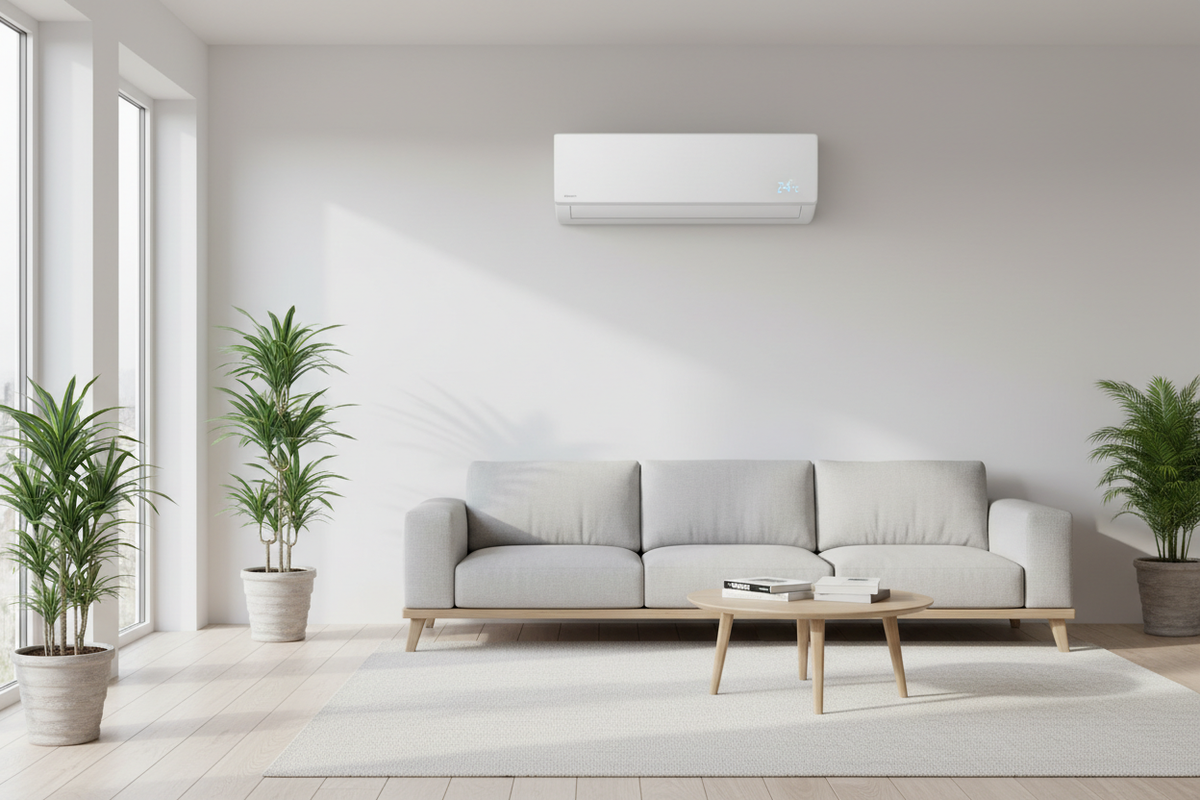
A split system consists of an indoor unit (mounted on the wall) and an outdoor compressor unit connected by refrigerant pipes. Split systems are the most energy-efficient type of air conditioner available for residential use and are the dominant choice across Europe for permanent home cooling installations.
- Single split: One indoor unit connected to one outdoor unit — ideal for cooling a single room or open-plan living area.
- Multi-split: Multiple indoor units connected to a single outdoor unit — allows cooling of several rooms without multiple outdoor units, ideal for apartments and smaller homes.
- Inverter technology: All quality split systems in 2026 use inverter compressors, which modulate power output to maintain the desired temperature precisely, rather than cycling on and off. Inverter systems are significantly more energy-efficient and quieter than fixed-speed models.
Split systems require professional installation (refrigerant handling requires F-Gas certification in the EU) and a suitable location for the outdoor unit. Budget approximately €150–€400 for installation on top of the unit cost.
Portable Air Conditioners
Portable units require no permanent installation — they sit on the floor and vent hot air through a flexible hose to a window or door. They are significantly less efficient than split systems (typically rated D or E on the EU energy label) but offer flexibility for renters or homes where outdoor unit installation is not possible. Prices range from approximately €200–€600. For best performance, choose a dual-hose model over a single-hose design.
Air-to-Air Heat Pumps
Modern split system air conditioners are almost universally reversible heat pumps — they can both cool in summer and heat in winter with exceptional efficiency (typically 3–5 kWh of heat output per 1 kWh of electricity consumed). In 2026, with European energy prices remaining elevated, a reversible heat pump air conditioner is one of the most cost-effective heating and cooling investments a homeowner can make.
EU Energy Labels & Efficiency Ratings
The EU energy label is your most important tool for comparing air conditioner efficiency. Since 2021, air conditioners sold in the EU use a revised energy label with a scale from A to G (replacing the old A+++ system). The new scale is deliberately stricter — most products currently on the market fall in the B–D range, with A and B reserved for the most efficient models.
Key Efficiency Metrics
- SEER (Seasonal Energy Efficiency Ratio): Measures cooling efficiency over a full season. Higher is better. Quality inverter systems achieve SEER ratings of 8–10+, earning B or A energy labels.
- SCOP (Seasonal Coefficient of Performance): Measures heating efficiency over a full season for reversible heat pumps. A SCOP of 4.0+ is considered excellent.
- EER (Energy Efficiency Ratio): Instantaneous cooling efficiency at a specific test condition — less useful than SEER for real-world comparisons.
For European homeowners focused on energy costs, prioritise units with a SEER of 8.0 or higher. The higher upfront cost of a more efficient unit is typically recovered within 2–3 years through lower electricity bills.
EU F-Gas Regulation & Refrigerants
EU F-Gas Regulation (EU) 517/2014 restricts the use of high-GWP refrigerants. In 2026, most new split systems use R-32 refrigerant, which has a significantly lower GWP than the older R-410A. Some premium models are transitioning to R-290 (propane) or R-454B. R-32 and newer alternatives are preferable from both a regulatory and environmental perspective.
Sizing Your Air Conditioner: Getting It Right
An undersized unit will struggle to cool the room; an oversized unit will cycle on and off too frequently, reducing efficiency and comfort. As a general guide for European homes with standard insulation:
- Up to 20 m²: 2.0–2.5 kW cooling capacity
- 20–30 m²: 2.5–3.5 kW
- 30–50 m²: 3.5–5.0 kW
- 50–70 m²: 5.0–7.0 kW
- 70+ m²: 7.0+ kW or multi-split system
Adjust upward for rooms with large south-facing windows, poor insulation, or high ceilings. A professional installer will perform a full heat load calculation — always request this before purchasing a split system.
Smart Features & Home Integration
In 2026, smart connectivity is standard on mid-range and premium air conditioners. Key smart features include Wi-Fi app control for remote operation, voice assistant integration (Alexa, Google, Siri), scheduling and geofencing, and energy consumption monitoring. Some units integrate with third-party smart thermostats for unified climate control.
For homes with a broader smart home ecosystem, our Smart Home Devices Guide 2026 covers how to build a cohesive connected home. For portable units without native smart features, a smart plug with energy monitoring can add basic remote control and consumption tracking.
Smart Buying Tips for European Homeowners
- Prioritise SEER over purchase price: A unit with SEER 8+ costs less to run over its lifetime. Calculate annual running cost (kWh ÷ SEER × local €/kWh tariff) before deciding.
- Choose R-32 or newer refrigerants: Avoid units still using R-410A — they face increasing EU regulatory restrictions and may be harder to service.
- Get a professional heat load calculation: A qualified installer accounts for insulation, window orientation, occupancy, and local climate to recommend the correct capacity.
- Check outdoor unit placement: Ensure adequate airflow and compliance with local planning regulations — some EU municipalities restrict outdoor unit placement on building facades.
- Consider a reversible heat pump: A reversible split system replaces both cooling and heating needs with a single efficient device, potentially qualifying for EU or national energy efficiency subsidies.
- Check for national subsidies: Several EU member states offer grants or tax incentives for high-efficiency heat pump installations. Check your country's energy agency website before purchasing.
- EU warranty: EU consumer law guarantees a minimum 2-year warranty. Buy from authorised EU retailers and ensure the installer is F-Gas certified.
Conclusion: Stay Cool & Energy-Smart in 2026
For most European homeowners, a high-efficiency inverter split system with a SEER of 8+ and R-32 refrigerant represents the best combination of performance, efficiency, and future-proofing. Portable units remain practical for renters or temporary cooling needs, but their lower efficiency means higher running costs over time.
Whatever type you choose, prioritise the EU energy label, get professional sizing advice, and take advantage of any available national subsidies to reduce your upfront investment.
Ready to find the perfect air conditioner for your home? Browse our full range of air conditioners and home climate devices at onlinestore24.eu — with fast EU-wide shipping and all prices in euros.
Meta description: Find the best air conditioners for European homes in 2026. Compare types, EU energy labels, SEER ratings & expert buying tips for every budget.